Techno Multi Services
The Industrial Plant Manager’s 2026 Maintenance Protocol
Extending RO Membrane & STP/ETP Lifespan While Eliminating Emergency Shutdowns
In manufacturing facilities, automotive assembly plants, chemical processing hubs, and commercial IT complexes, the water and wastewater treatment plant is frequently treated as an afterthought—until it abruptly breaks down. When a high-pressure pump cavitates, an entire rack of reverse osmosis membranes permanently scales over, or biological bacteria crash in an effluent treatment plant, the entire factory grinds to a screeching halt.
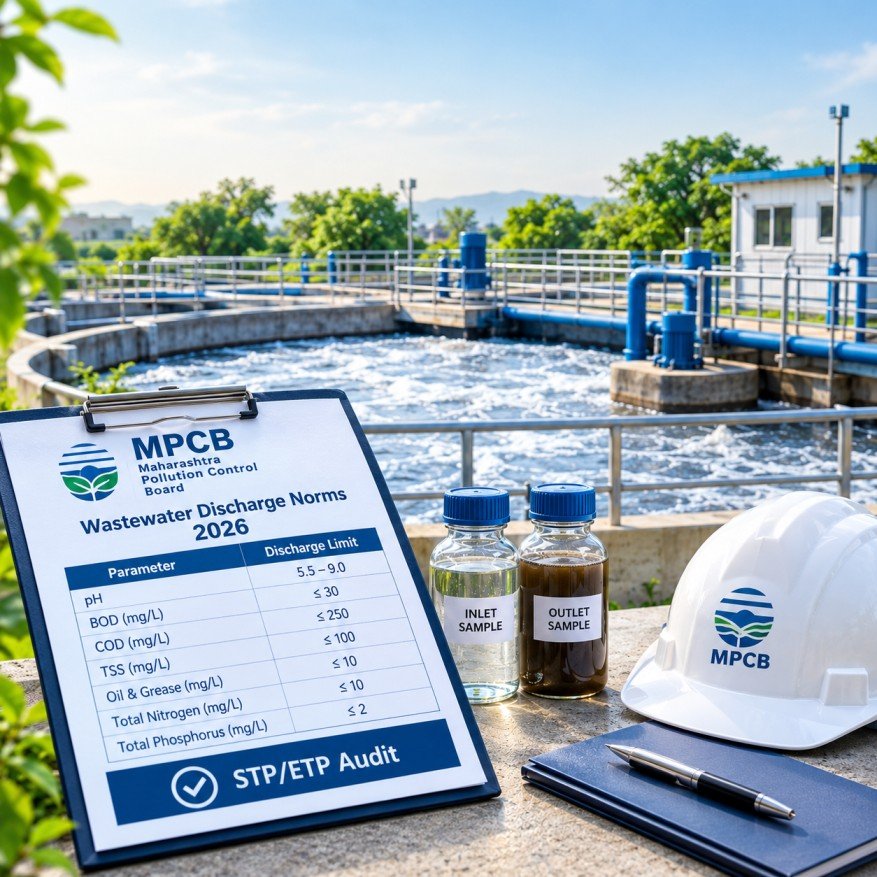
Production lines cannot operate without demineralized or softened process water; paint shops cannot operate without ultra-pure rinse water; and under strict MPCB regulations, a factory cannot legally operate its core manufacturing lines if its wastewater treatment plant is inoperable. Emergency repairs executed in panic mode routinely cost 3x to 5x more than structured preventative care, not to mention the astronomical cost of unrecoverable lost manufacturing output.
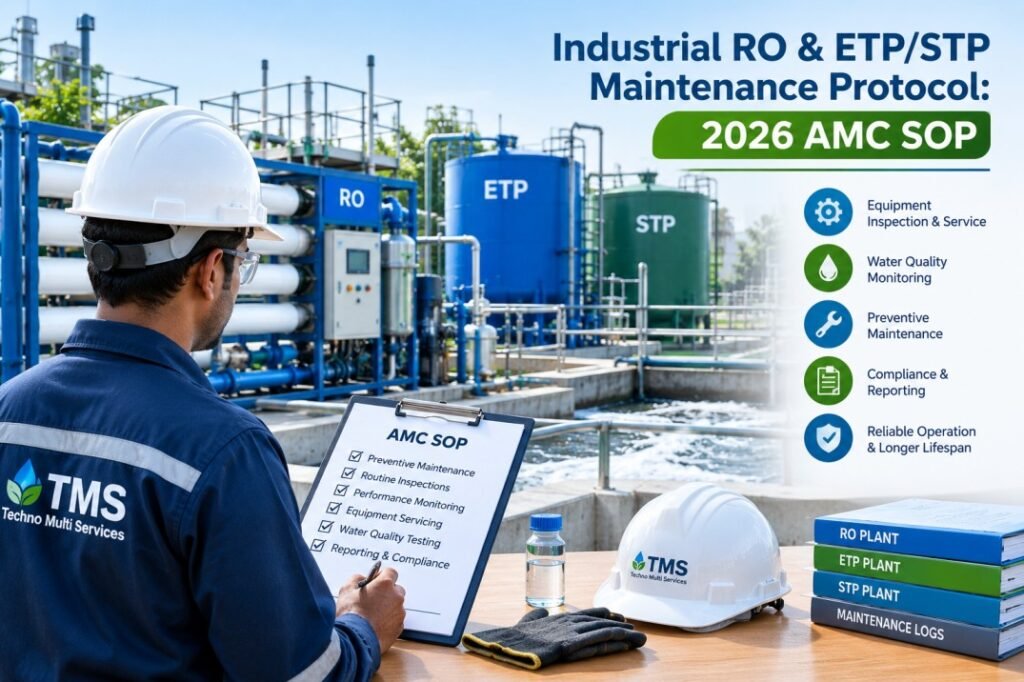
This comprehensive maintenance manual provides plant utility heads, maintenance managers, and chemical engineers with the authoritative 2026 standard operating procedure (SOP) for RO membrane preservation, biological culture stabilization, electro-mechanical servicing schedules, and a business case comparison of in-house labor versus specialized turnkey AMC retainers.
1. Industrial Reverse Osmosis (RO) Membrane Preservation Protocol
Industrial reverse osmosis membranes represent a major recurring capital asset. A 100 KLD multi-stage RO plant containing 24 high-rejection 8040 brackish water membrane elements represents an investment of ₹4,50,000 to ₹7,00,000 in membrane elements alone. Premature replacement due to neglect is an avoidable operational failure.
Tracking Normalized Permeate Flow (NPF) & Salt Passage
Never wait for visual water quality deterioration or a total loss of flow before taking action. Plant operators must record daily operational data normalized for temperature and pressure variations. A Clean-In-Place (CIP) chemical wash cycle must be triggered as soon as any of the following threshold limits is reached:
- Salt Passage (Permeate TDS) increases by 10%.
- Normalized Permeate Flow (NPF) drops by 10% to 15% below initial commissioning baseline.
- Differential Pressure ($\Delta P$) across any single membrane stage increases by 15%.
Two-Stage Clean-In-Place (CIP) Chemical Wash SOP
Executing an effective CIP cycle requires a sequential, two-stage chemical wash utilizing a dedicated low-pressure, high-flow circulation skid:
Cleaning Stage |
Target Foulants Removed |
Recommended Chemical Formulation |
Target pH & Temperature Control |
|---|---|---|---|
|
Stage 1: Low-pH Acidic Wash
|
Inorganic mineral scale (Calcium Carbonate $CaCO_3$, Barium Sulfate, Calcium Phosphate) and metal oxides (Iron, Manganese).
|
2.0% Citric Acid solution ($C_6H_8O_7$) or 0.2% Hydrochloric Acid ($HCl$).
|
Maintain pH at 2.0 – 2.5; solution temperature at 35°C – 40°C for maximum kinetic solubility. Circulate for 60 min, soak for 60 min.
|
|
Stage 2: High-pH Alkaline Wash
|
Organic fouling, bio-slime, bacterial biofilm, and synthetic polymers.
|
0.1% Sodium Hydroxide ($NaOH$) combined with 0.1% EDTA sodium salt chelating agent.
|
Maintain pH at 11.0 – 11.5; temperature at 30°C – 35°C (never exceed 40°C at pH 11 to avoid membrane delamination). Circulate 60 min, soak 120 min
|
Silt Density Index (SDI) and Free Chlorine Safeguards
Polyamide thin-film composite membranes have zero tolerance for strong oxidizing agents. Free chlorine dissolved in municipal or treated water oxidizes the polyamide backbone within hours. Operators must continuously monitor Oxidation-Reduction Potential (ORP):
- ORP Ceiling :- Maintain RO feed ORP strictly < 200 mV by precisely calibrating Sodium Metabisulfite (SMBS) dosing pumps (dosing approx. 3.0 ppm SMBS per 1.0 ppm free chlorine).
- Silt Density Index (SDI₁₅) :- Daily testing with a 0.45-micron test membrane under 30 psi pressure must verify SDI 5.0 indicates upstream multimedia filter breakthrough that will rapidly foul membranes.
Facilities facing chronic membrane degradation can explore complete system revamping through our industrial RO plant engineering and membranes team.
2. Biological Health Management in STPs and ETPs: Preventing Culture Death
Unlike physical filters, biological wastewater plants—whether Moving Bed Biofilm Reactors (MBBR) or Activated Sludge Process (ASP)—are living microbiological ecosystems. When bacteria die, restoring biological equilibrium requires 10 to 21 days of seeding, sludge hauling, and operational downtime.
Managing MLSS and F/M Ratios
In an industrial turnkey ETP revamping and aeration optimization skid, the Mixed Liquor Suspended Solids (MLSS) in the aeration basin must be maintained within the optimal window:
- Conventional Activated Sludge :- 2,500 to 3,500 mg/L MLSS.
- MBBR / IFAS Systems :- 3,500 to 4,500 mg/L suspended MLSS + active biofilm on carrier media.
- Membrane Bioreactors (MBR) :- 8,000 to 12,000 mg/L MLSS.
Shutdown Survival Protocol: Preventing Starvation
During extended factory shutdowns (such as Diwali festival shutdowns, annual maintenance overhauls, or inventory breaks spanning 3 to 10 days), raw effluent flow ceases completely. Without incoming organic carbon, aerobic bacteria rapidly enter endogenous respiration, consuming their own cellular mass and dying off.
The Emergency Bio-Nutrient Dosing Formula:
To keep a 100 KLD aeration basin alive during a zero-flow shutdown :-
1) Maintain continuous air aeration with dissolved oxygen (DO) throttled to 1.5 – 2.0 mg/L to prevent auto-oxidation.
2) Dose supplementary organic carbon: Add 10 to 15 kg of molasses or crude sugar per 50,000 liters of aeration volume every 48 hours.
3) Maintain the critical nutrient ratio ($BOD : N : P = 100 : 5 : 1$) by dosing 1.5 kg of commercial Urea and 0.3 kg of Diammonium Phosphate (DAP) per batch.
3. 48-Point Electro-Mechanical Servicing Schedule
Mechanical utility equipment operates in hostile, corrosive environments laden with moisture, hydrogen sulfide, and caustic chemicals. The following preventive maintenance rhythm should be codified into your computerized maintenance management system (CMMS):
Frequency |
Equipment Checked |
Inspection Protocol & Maintenance Action |
|---|---|---|
|
Daily
|
Raw Effluent & Sludge Pumps
|
Check mechanical seal flush liquid, gland packing leakage, bearing housing temperature (< 65°C), and motor full-load amperes.
|
|
Daily
|
Chemical Dosing Skids
|
Check stroke length, purge air bubbles from suction tubing, check chemical tank levels (coagulant, flocculant, antiscalant, SMBS).
|
|
Weekly
|
Roots Air Blowers
|
Check gear oil level (synthetic ISO VG 220), clean intake air filter elements with dry compressed air, check V-belt tension and alignment.
|
|
Weekly
|
Water Softener Skids
|
Verify brine tank salt saturation (> 25° Bé), perform hardness titration test (< 5 ppm as $CaCO_3$). Check water softener plant maintenance and resin regeneration multiport valve timings.
|
|
Monthly
|
Multi-Grade & Carbon Filters
|
Inspect differential pressure gauges. Execute high-rate backwash and air scour cycles. Inspect media bed loss and replenish depleted anthracyte/carbon.
|
|
Quarterly
|
Filter Press & Dewatering Units
|
Check hydraulic power pack oil, inspect filter cloth weave for blinding, execute high-pressure water washing of cloths with 2% hydrochloric acid rinse.
|
|
Quarterly |
Instrumentation Probes.
|
Calibrate online pH, DO, and OCEMS turbidity sensors against certified standard buffer solutions. Inspect electromagnetic flow meter grounding rings.
|
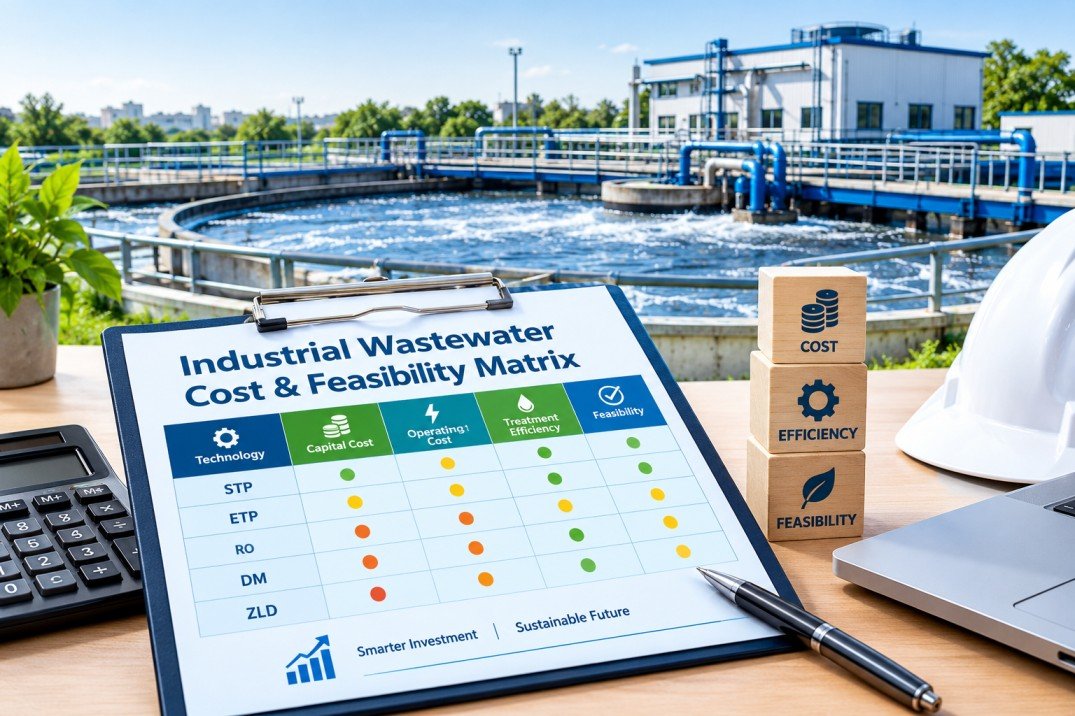
4. Untrained In-House Labor vs. Certified Turnkey O&M Retainers
Many manufacturing plants assign the operation of their multi-crore water treatment assets to low-cost general housekeeping or untrained junior contract labor. The apparent monthly salary savings are completely wiped out by the hidden costs of catastrophic downtime:
Evaluation Parameter |
Untrained In-House / General Contract Labor |
Turnkey Professional O&M AMC (Techno Multi Services) |
|---|---|---|
|
Technical Expertise
|
Basic on/off pump operators lacking chemical or biological engineering training. |
Certified environmental engineers, diploma chemical technicians, and trained instrumentation staff.
|
|
Membrane & Asset Lifespan
|
Shortened by 50% due to delayed CIP, improper antiscalant dosing, and dry pump runs.
|
Extended by 100%+ through scheduled preventive CIP, predictive vibration analysis, and OEM spares.
|
|
Regulatory Risk (MPCB)
|
High risk of Section 33A closure notices and bank guarantee forfeiture due to grab sample failure.
|
Guaranteed Compliance: Contractual guarantees on treated water discharge limits and OCEMS uptime.
|
|
Chemical Optimization
|
Excessive chemical dumping or under-dosing causing floc collapse and high recurring chemical bills.
|
Verify brine tank salt saturation (> 25° Bé), perform hardness titration test (< 5 ppm as $CaCO_3$). Check water softener plant maintenance and resin regeneration multiport valve timings. |
|
Emergency Breakdown Response
|
Days or weeks spent waiting for external vendors; catastrophic factory downtime.
|
2 to 4 Hour On-Site Emergency Mobilization in Pune MIDC with backup pump and membrane stock.
|
By partnering with a certified maintenance provider offering comprehensive water treatment plant AMC and O&M services in Pune, industrial facilities transfer operational liabilities to experienced specialists while freeing in-house engineering resources to focus entirely on core manufacturing. All TMS service operations adhere to stringent ISO 9001 and ISO 14001 engineering protocols, verified through our ISO and compliance certificates of TMS.a
Eliminate Plant Breakdowns: Book a 100% Free 48-Point Diagnostic Audit
Techno Multi Services will dispatch a senior utility specialist to your facility in Chakan, Bhosari, Ranjangaon, Hinjawadi, or Talegaon to perform an on-site mechanical, chemical, and biological audit of your STP, ETP, or RO plant.
Frequently Asked Questions (High-Value Technical & Commercial Answers)
A comprehensive Annual Maintenance Contract (AMC) from Techno Multi Services covers 24/7 certified resident operating personnel, daily water quality chemical analysis, scheduled preventive maintenance for all pumps, blowers, and valves, Clean-In-Place (CIP) membrane cleaning, chemical dosing optimization, emergency breakdown repairs within 4 hours, and statutory MPCB compliance documentation support.
Premium food-grade strong acid cation (SAC) resin typically provides a working lifespan of 5 to 7 years when properly maintained. However, premature degradation occurs if raw water contains high free chlorine (> 0.5 ppm), high iron concentrations, or if brine regeneration cycles are missed, leading to bead fracturing and loss of softening exchange capacity.
In an emergency culture crash, TMS engineers mobilize within 2 to 4 hours with specialized industrial acclimated bacterial cultures and bio-enzymes. We isolate the toxic incoming stream, reset pH and aeration parameters, and seed the aeration basin to restore full biological COD/BOD reduction within 48 to 72 hours, preventing statutory MPCB violations.