What is ZLD System? Complete Guide to Zero Liquid Discharge Plants
A Zero Liquid Discharge (ZLD) system is an advanced wastewater treatment process that ensures 100% treatment, recovery, and reuse of industrial wastewater, leaving no liquid effluent for discharge into the environment. In other words, ZLD plants help industries conserve water, reduce pollution, and comply with strict environmental regulations.
Moreover, with increasing water scarcity and stricter pollution control norms, ZLD systems have become essential for sustainable industrial operations, especially in India.
According to the Central Pollution Control Board (CPCB), industries generating high-pollution wastewater must adopt advanced treatment technologies such as ZLD to protect water bodies and soil.
Key Features of a ZLD System:
-
Complete elimination of liquid wastewater discharge
-
High water recovery and reuse efficiency
-
Reduced environmental pollution
-
Compliance with CPCB and pollution control norms
-
Suitable for water-scarce regions
How a ZLD System Works: Treatment Process
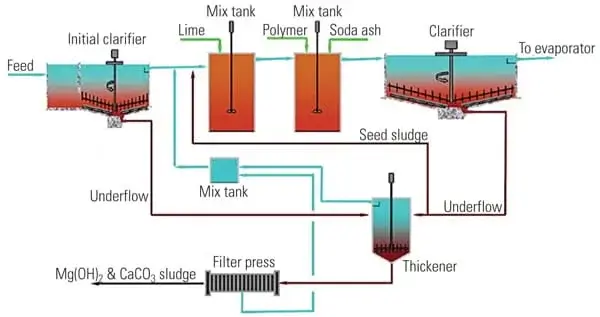
Initially, wastewater passes through screens, oil skimmers, and chemical treatment units. This stage removes large solids, oil, grease, and suspended impurities. As a result, downstream treatment becomes more efficient.
2.Biological Treatment
Next, biological processes reduce BOD and COD levels in wastewater. Moreover, this step improves water quality before membrane treatment.
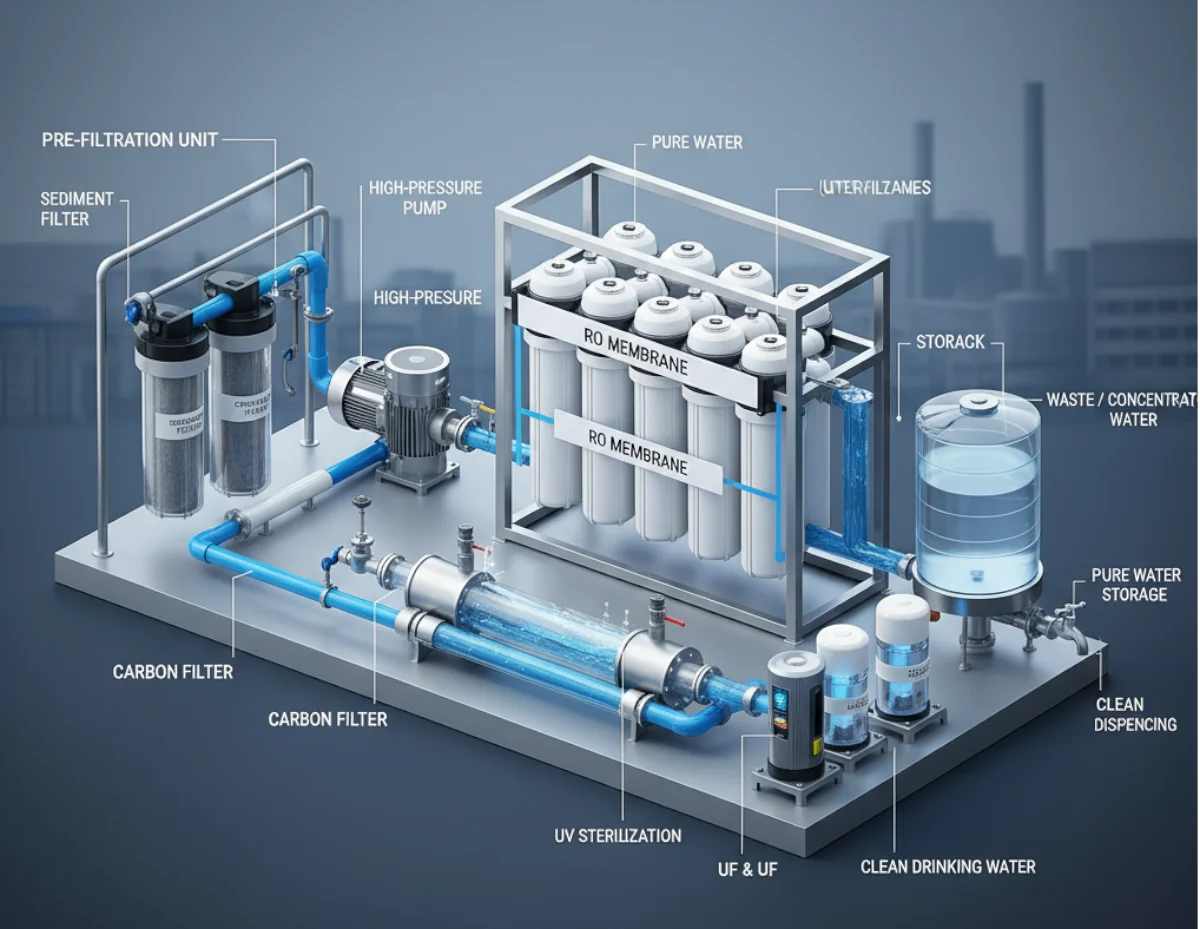
3.Membrane Treatment (RO / MBR)
After that, Reverse Osmosis (RO) or Membrane Bioreactors (MBR) separate clean water from dissolved salts. Consequently, a large portion of treated water is recovered for reuse.
4. Evaporation Process
Then, the RO reject enters evaporators, where water evaporates and concentrated brine remains. This step further reduces liquid waste.
5. Crystallization
Finally, crystallizers convert concentrated brine into solid salts, which industries safely dispose of or reuse. Thus, the system achieves complete zero liquid discharge.
Advantages of a ZLD System
A ZLD plant ensures that industries do not release treated or untreated wastewater into rivers or land.
2. Maximizes Water Reuse
Industries can reuse 90–95% of treated water, which significantly reduces freshwater demand.
3. Reduces Water Scarcity Impact
Therefore, ZLD systems are highly beneficial in drought-prone and water-stressed areas.
4. Ensures Legal Compliance
Industries comply with strict environmental laws and avoid heavy penalties.
5. Protects the Environment
ZLD prevents contamination of groundwater, rivers, and soil, supporting sustainable development.
Benefits of Zero Liquid Discharge Plants
-
Environmental Protection: Prevents industrial water pollution
-
Sustainable Water Management: Promotes recycling and reuse
-
Cost Savings: Reduces long-term water procurement and disposal costs
-
Improved Corporate Image: Demonstrates commitment to sustainability
-
Operational Reliability: Safer waste handling and disposal
-
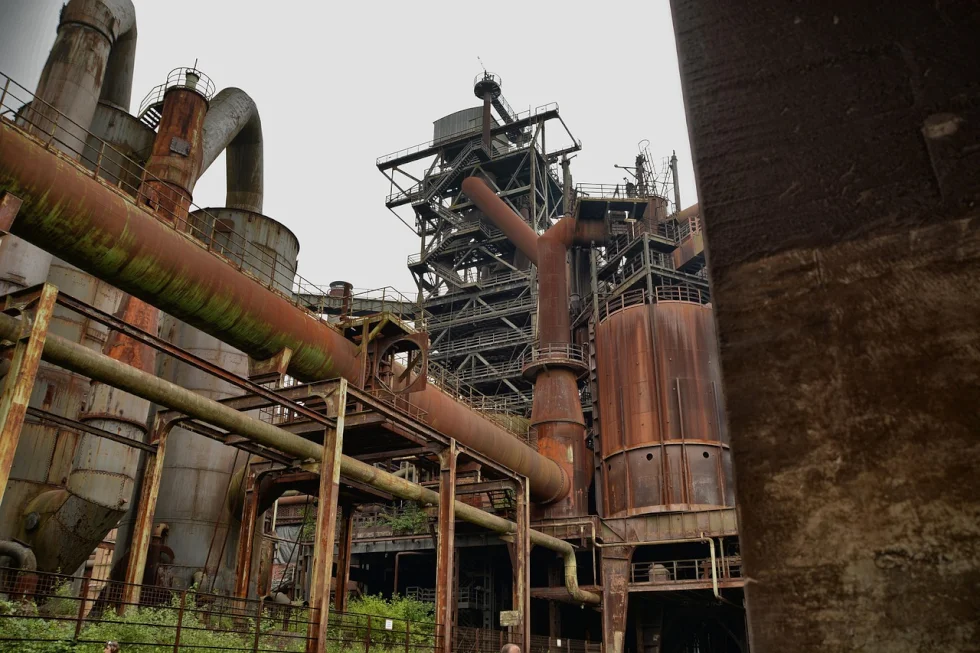
Textile and dyeing industries
-
Pharmaceutical manufacturing units
-
Chemical processing industries
- Power plants
- Refineries
- Food and beverage industries
FAQs on ZLD Systems
Yes, in many states and industrial zones, ZLD is mandatory for high-pollution industries.
Q2. Is ZLD treated water reusable?
Yes, industries reuse treated water for cooling towers, boilers, washing, and utility purposes.
Q3. Is a ZLD system expensive?
Initially, costs are higher. However, long-term water savings and compliance benefits make ZLD cost-effective.
Q4. What happens to the waste in a ZLD system?
ZLD systems convert liquid waste into solid salts, which industries safely dispose of or reuse.
Conclusion
A Zero Liquid Discharge (ZLD) system is a powerful and sustainable solution for industries aiming to eliminate wastewater discharge, conserve water, and meet environmental regulations. In conclusion, by adopting ZLD technology, industries not only protect the environment but also achieve long-term operational and economic benefits.