How a Demineralized Water System Works
A Demineralized Water (DM Water) Plant removes dissolved salts and minerals from water to produce high-purity water. Firstly, this system improves water quality and protects industrial equipment from scaling and corrosion. Moreover, industries follow environmental guidelines issued by the Central Pollution Control Board to ensure compliant and safe water treatment operations.
As a result, DM Water Treatment Systems help industries maintain consistent water quality. Additionally, they improve boiler efficiency and reduce operational risks. Therefore, DM water plays a vital role in processes that require mineral-free water for reliable performance.
- Produces high-purity, mineral-free water
- Prevents scaling and corrosion in equipment
- Improves efficiency of boilers and industrial processes
- Ensures consistent water quality
- Lowers maintenance and operational issues
DM Water Plant Process (How It Works)
1. Pre-Treatment
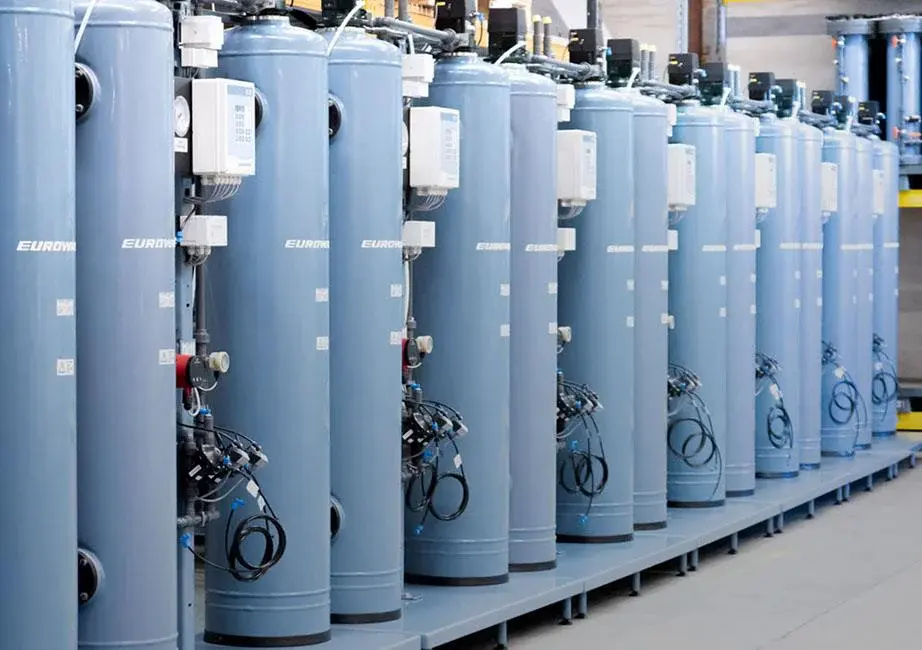
Firstly, raw water passes through sand and activated carbon filters. As a result, suspended solids, color, and organic impurities are removed, which protects the system from fouling.
2. Cation Exchange Process
Next, water enters the cation exchanger where calcium and magnesium ions are removed. Consequently, hardness levels reduce significantly, improving water quality.
3. Anion Exchange Process
After that, anion exchange removes chlorides, sulfates, and nitrates. Thus, the water achieves higher purity and stability.
4. Mixed Bed Polishing (Optional)
Finally, mixed bed resin units polish the water further. Therefore, the system delivers extremely low-conductivity DM water.
5. DM Water Storage & Distribution
Subsequently, treated DM water is stored in tanks and supplied to industrial processes as required.
Key Advantages of DM Water Systems
1.Produces high-purity water for critical industrial applications.
2. Protects boilers, heat exchangers, and pipelines from scaling.
3. Improves process efficiency and operational reliability.
4.Reduces downtime and maintenance costs.
5.Helps industries meet strict quality standards.
DM Water Plants support various industries. For example, they are widely used in:
Power plants (boilers & turbines)
- Pharmaceutical industries
Chemical manufacturing units
- Electronics & semiconductor industries
Laboratories and research centers
- Food & beverage processing
- Automotive and engineering industries
Benefits of DM Water Plant (Why It Is Important?)
Firstly, DM water enhances equipment life by preventing scale formation.
Moreover, it ensures high product quality in pharma and electronics industries.
Additionally, clean water improves heat-transfer efficiency in boilers.
Furthermore, DM water supports regulatory compliance.
Finally, it reduces chemical usage and long-term operational costs.
1. Enhances Equipment Life
Mineral-free water prevents damage to boilers and machinery, extending equipment lifespan.
2. Ensures Product Quality
High-purity water improves final product quality, especially in pharma and electronics industries.
3. Energy Efficiency
Clean water improves heat transfer efficiency in boilers and cooling systems.
4. Regulatory Compliance
DM water helps industries meet quality and operational standards.
5. Cost Savings
Reduced chemical usage, lower maintenance, and fewer breakdowns lead to long-term savings.
FAQs Based on DM Water Plant
Q1. What is the difference between RO water and DM water?
RO water removes most dissolved solids, while DM water removes almost all ions, producing higher purity water.
Q2. Is DM water safe for drinking?
DM water is not recommended for drinking as it lacks essential minerals.
Q3. Where is DM water mainly used?
It is mainly used in boilers, pharmaceuticals, chemicals, laboratories, and power plants.
Q4. Does a DM plant require maintenance?
Yes. Regular resin regeneration and system checks are required for consistent performance.
Conclusion
A DM Water Plant is an essential solution for industries requiring high-purity, mineral-free water. With efficient treatment processes, reliable operation, and proper maintenance, DM plants help improve equipment life, enhance productivity, and ensure consistent water quality. Investing in a DM Water Plant supports long-term industrial efficiency and sustainability.