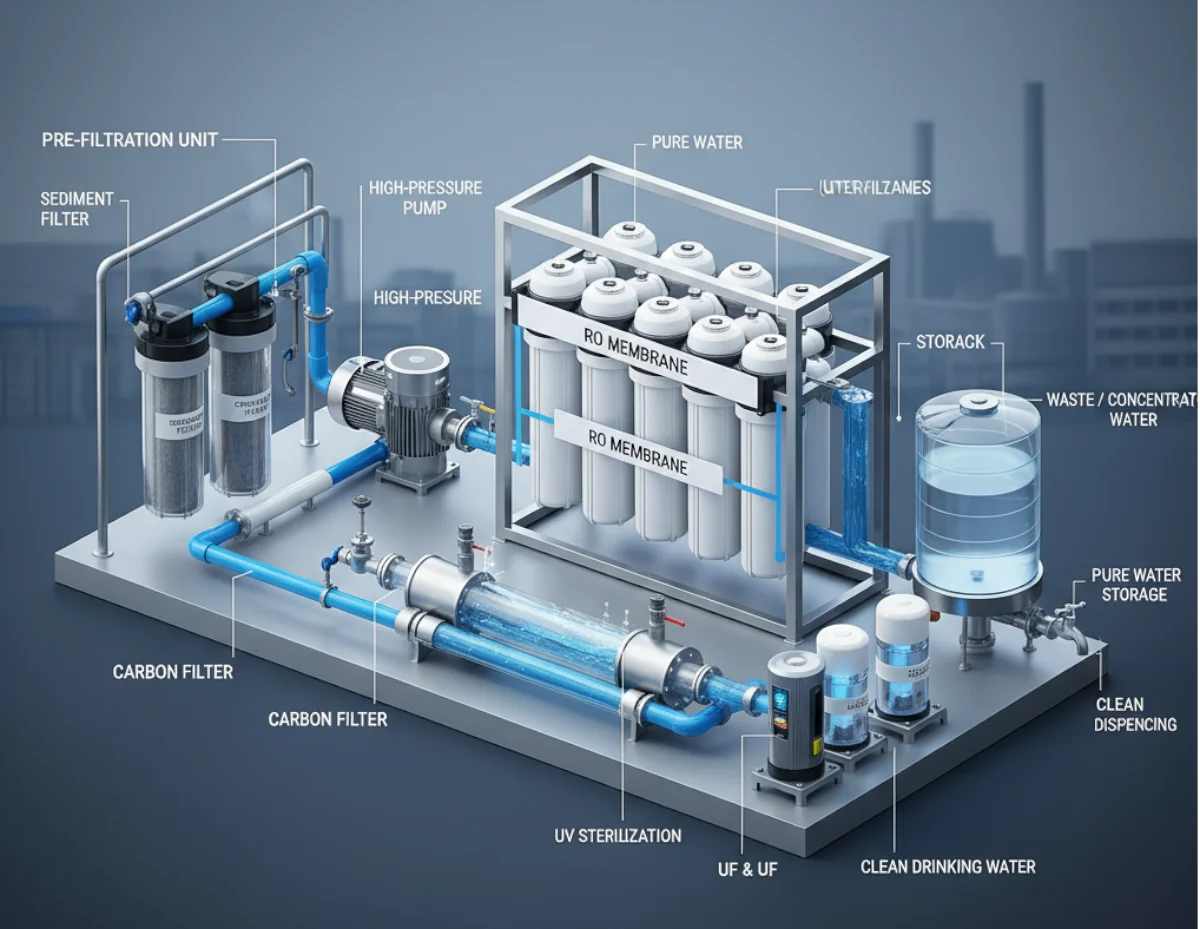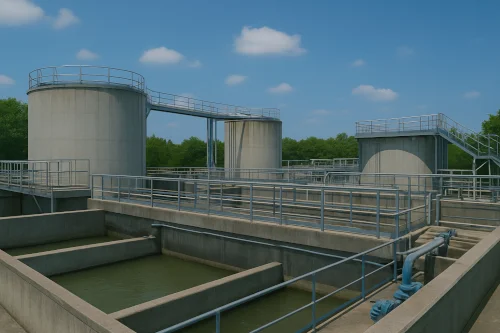
Rainwater Harvesting is one of the most effective and sustainable methods of conserving water for residential, commercial, and industrial use. Rainwater Harvesting systems collect and store rainwater from rooftops and open areas, thereby reducing dependency on municipal water supply and borewells. Moreover, Rainwater Harvesting helps recharge groundwater levels and supports long-term water management in urban and rural regions. According to the Central Ground Water Board (CGWB), Rainwater Harvesting significantly improves groundwater availability when implemented correctly (https://cgwb.gov.in). Additionally, industries integrate Rainwater Harvesting with advanced water treatment solutions such as ZLD Systems to maximize water reuse and sustainability. Additionally, industries often combine rainwater harvesting with advanced wastewater solutions such as ZLD Systems to maximize water reuse and achieve sustainable water management.
Additionally, with rising water scarcity and irregular rainfall patterns, rainwater harvesting plays a crucial role in long-term water management. Therefore, many residential societies, industries, and institutions now adopt rainwater harvesting systems to ensure water security.
Top Benefits of Rainwater Harvesting
-
Rainwater harvesting reduces water scarcity in urban areas.
-
Rainwater harvesting systems support groundwater recharge.
-
Rainwater harvesting helps industries and households save water costs.
Conserves Water Resources
Rainwater harvesting helps save a significant amount of water, especially in areas facing water scarcity. It supports households and industries with an additional water source.
- Helps prevent urban flooding in heavy rain regions
- Supports rural water conservation initiatives
- Reduces water demand in growing cities
- Helps manage drought-prone zones effectively
- Easy to install on rooftops or open land
Advantages of Rainwater Harvesting
- Reduces dependency on municipal water supply and borewells, providing an additional reliable water source.
- Supports groundwater recharge and helps restore declining water tables through natural percolation.
- Helps maintain water availability during summer and drought conditions
- Reduces water bills and long-term water management costs for homes, industries, and commercial buildings.
- Minimizes stormwater runoff and reduces urban flooding during heavy rainfall.
- Prevents soil erosion and improves soil moisture, promoting better agricultural productivity.
- Provides naturally soft water, suitable for cleaning, washing, gardening, and general domestic use.
FAQs: Rainwater Harvesting
1)What is Rainwater Harvesting?
Rainwater Harvesting is the process of collecting and storing rainwater from rooftops or open areas and using it for domestic, agricultural, and industrial purposes. It helps conserve water and reduce dependency on groundwater and municipal supply.
2) Why Rainwater Harvesting Is Important
It is essential due to rising water scarcity, overuse of groundwater, and irregular municipal water supply. Rainwater harvesting helps recharge groundwater levels and ensures a sustainable long-term water source.
3)How Rainwater Harvesting Systems Work
It is beneficial for homes, apartments, societies, schools, hospitals, industries, commercial buildings, farms, and rural communities.
4) Can rainwater be used safely for household purposes?
Yes. Rainwater can be used safely for washing, cleaning, gardening, and toilet flushing. With proper filtration, it can also be used for drinking purposes. Hard water issues can be handled by integrating softening systems.