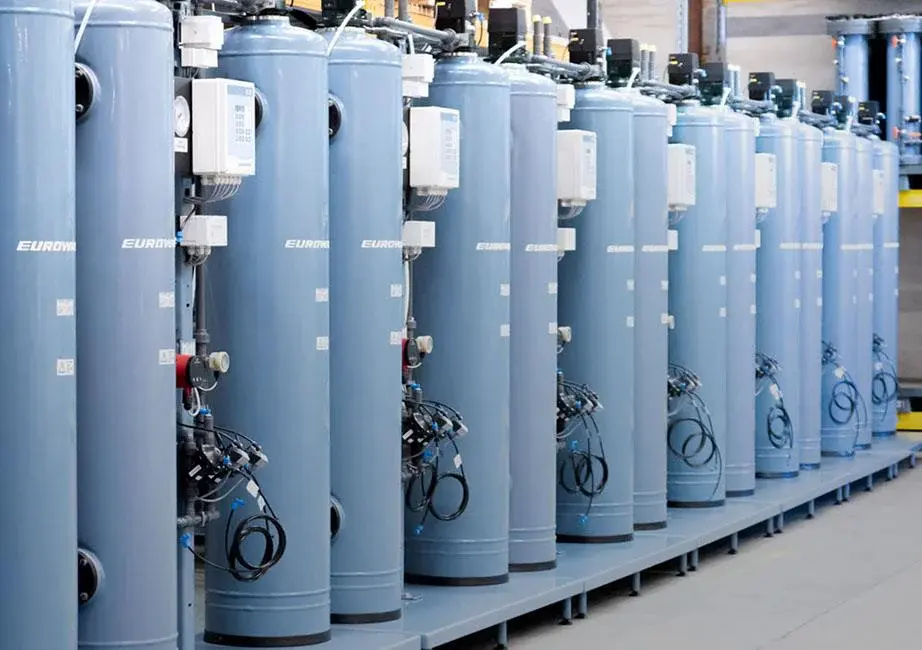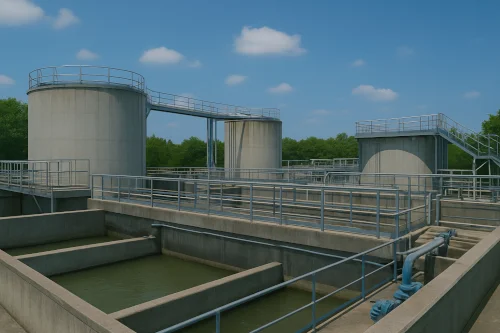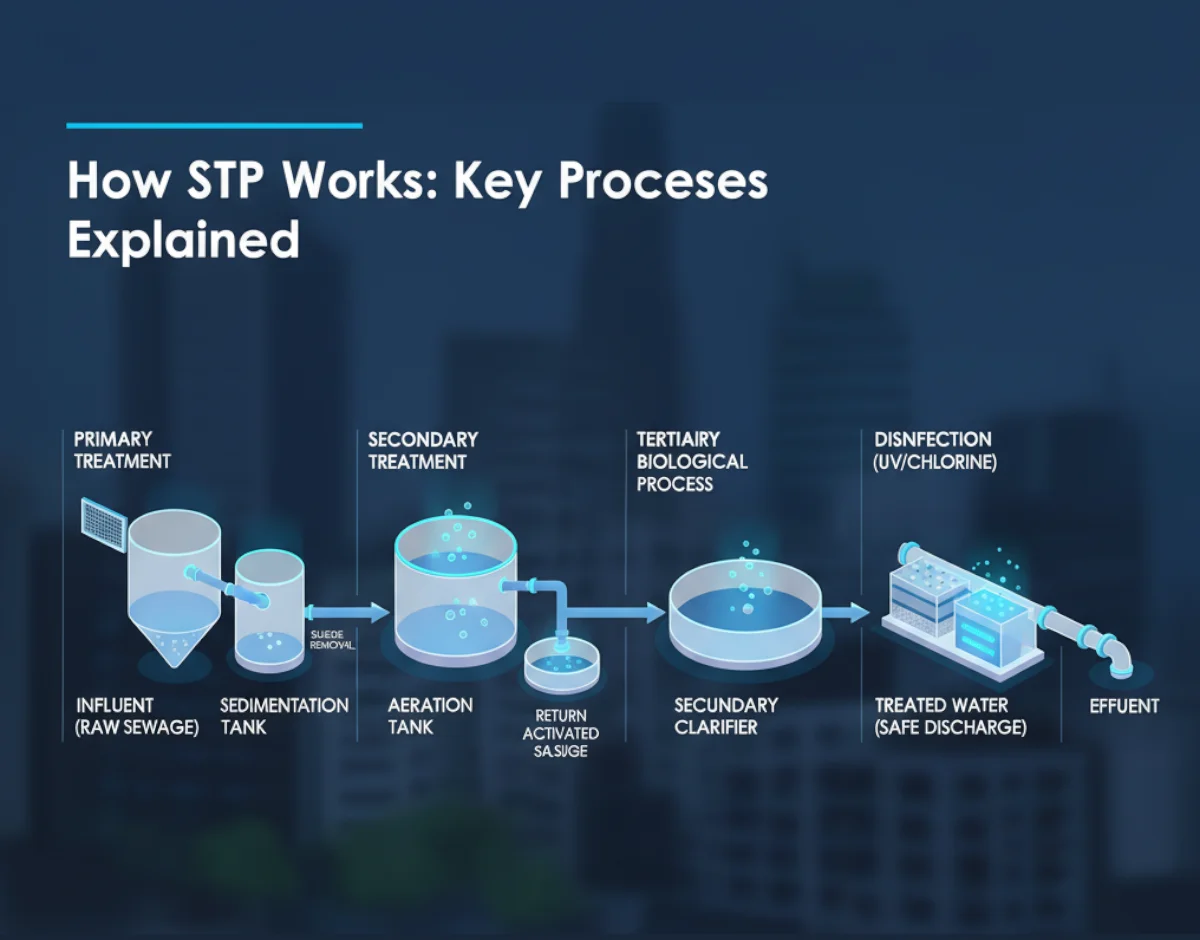
How STP Works | Sewage Treatment Plant Process Explained is an important topic for understanding modern wastewater management. A Sewage Treatment Plant (STP) treats wastewater generated from homes, residential societies, hotels, offices, and industries. This sewage treatment process includes screening, aeration, biological treatment, clarification, and disinfection to produce clean, reusable water while protecting the environment. A Sewage Treatment Plant (STP) treats wastewater generated from homes, residential societies, hotels, offices, and industries. The treatment process includes steps such as screening, aeration, biological treatment, clarification, and disinfection. In the aeration tank, microorganisms break down organic waste, turning contaminated water into clean, reusable water. Technologies like SBR, MBBR, and MBR have made STPs more compact and efficient.
This guide on How STP Works | Sewage Treatment Plant Process Explained highlights the importance of proper sewage treatment for water reuse and sustainability.
A Sewage Treatment Plant (STP) Understanding How STP Works | Sewage Treatment Plant Process Explained helps industries and residential projects manage wastewater efficiently and meet environmental regulations.
According to the Central Pollution Control Board (CPCB), sewage treatment plants are essential for controlling water pollution and protecting natural water bodies.
The treatment flow usually begins with screening and grit removal, followed by biological treatment through aeration, and concludes with clarification and sludge management. Modern STPs are designed to reduce pollution load, meet discharge norms, and support sustainable water reuse, especially in areas with high water scarcity.
Whether for residential communities or industrial facilities, choosing the right STP technology and proper maintenance ensures long-term performance and compliance.
What is an STP? – How STP Works in Sewage Treatment Plants
An STP is a system designed to clean and treat wastewater from homes, buildings, hotels, and industries. It removes contaminants, making water safe for reuse.
- High efficiency in removing organic waste
- Requires less space and maintenance
- Produces better-quality treated water
- Repares water for biological treatment
- Reduces pollution and environmental impact
Advantages of an STP – How STP Works for Wastewater Treatment
1. Helps in Water Reuse
STPs treat wastewater and convert it into reusable water.
This treated water can be used for gardening, flushing, landscaping, and cooling towers, reducing fresh water usage.
2. Reduces Water Scarcity
By recycling sewage water, STPs save lakhs of liters of fresh water every day.
This supports sustainable water management, especially in cities with limited supply.
3. Protects the Environment
Treated wastewater prevents contamination of rivers, lakes, and soil.
It reduces pollution and helps maintain ecological balance.
4. Meets Government Compliance
STPs help residential societies, industries, hotels, and commercial buildings follow pollution control norms and avoid penalties from environmental boards.
5. Improves Public Health
By eliminating harmful bacteria, pathogens, and pollutants from wastewater, STPs help control diseases and promote healthy living conditions.
Benefits of a Sewage Treatment Plant Process Explained
1. Protects the Environment & Natural Water Bodies
STPs remove harmful pollutants, toxic chemicals, and organic waste from sewage. This prevents contamination of rivers, lakes, and groundwater, helping protect natural ecosystems.
2. Enables Wastewater Recycling & Reuse
Treated water can be reused for gardening, toilet flushing, landscaping, irrigation, construction work, and cooling towers. This significantly reduces the consumption of fresh water and promotes water conservation.
3. Ensures Compliance with Government Regulations
Residential societies, hotels, hospitals, commercial buildings, and industries must install STPs as per Pollution Control Board (PCB) norms. Proper wastewater treatment helps avoid penalties and legal issues.
4. Reduces Operating & Water Supply Costs
By reusing treated wastewater, the dependency on fresh water decreases, resulting in lower water bills. Additionally, sludge from STPs can be processed into biogas or organic fertilizer, generating economic benefits.
5. Prevents Health Risks & Improves Hygiene
Wastewater contains harmful pathogens like bacteria and viruses. STPs remove these contaminants, preventing waterborne diseases, unpleasant odors, and mosquito breeding, therefore improving public health.
FAQs Based on STP Benefits
Q1. Is it mandatory to install an STP in residential or commercial projects?
Yes. According to environmental regulations, large residential complexes, commercial buildings, hospitals, hotels, and industries must install STPs.
Q2. Is the treated water safe to reuse?
Yes. If properly treated, it is safe for flushing, gardening, and non-potable industrial applications.
Q3. How does an STP reduce cost?
It minimizes fresh water consumption and reduces water bills. Treated sludge can also be reused as biogas or organic fertilizer, saving additional expenses.
Q4. How does an STP contribute to environmental protection?
It prevents sewage discharge into natural water sources and encourages recycled water usage, conserving natural water resources.